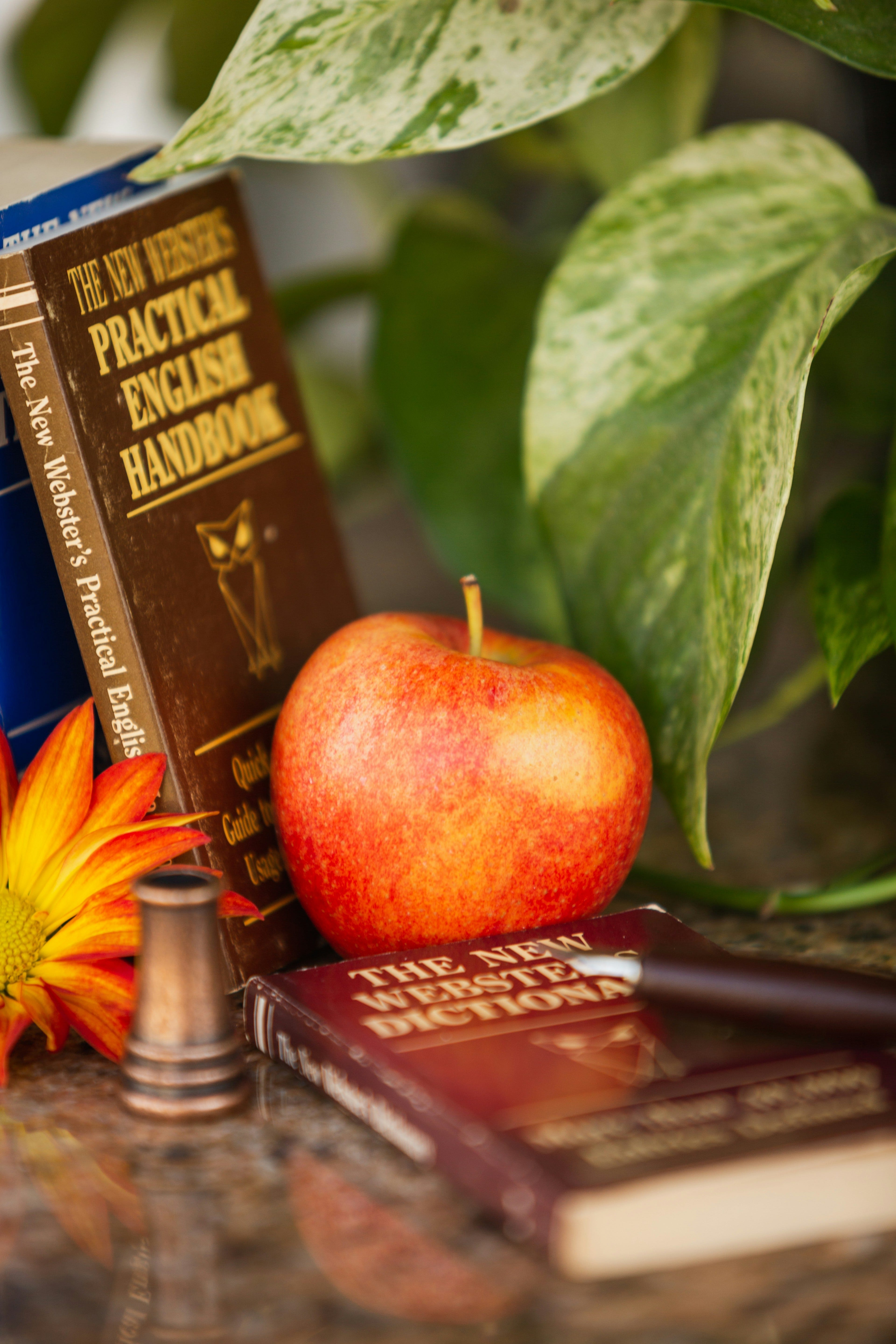

One of the most attractive characteristics someone can have is a sophisticated vocabulary. Mention a word like juxtaposition or enigmatic over coffee, and I'll probably remember the conversation long after I've forgotten what we were drinking. In a world of no cap, sigma, and "it's giving," having a deep relationship with the English language feels almost like a long-lost skill.
I have a habit of becoming a linguistic chameleon, instinctively matching my word choice to whoever is on the receiving end. Yet when I studied child development and education, we were taught to do the opposite with children. We were always told to incorporate academic vocabulary into our language with children. Even if they don’t immediately recognize the meaning of the word, they absorb vocabulary through context. Research in language development consistently shows that children learn new words best when they hear them used naturally in meaningful conversations.
So why don't we extend the same courtesy to adults?
Instead, we simplify our language for adults because we're afraid of seeming pretentious. We apologize for using "big words." We replace melancholy with sad, peculiar with weird, meticulous with careful. But every conversation is an opportunity to learn from one another and expand eachother’s worlds.
I think, as English speakers, many of us have lost sight of just how beautiful our language is. We sometimes forget it’s an art form. English is a patchwork quilt stitched together from Latin, Greek, Germanic, French, Norse, Arabic, and countless other influences. It is messy, inconsistent, and wonderfully expressive. We don't just have one word for "happy." We have content, elated, ecstatic, jubilant, and euphoric. We don't simply feel "sad." We can feel forlorn, wistful, heartbroken, nostalgic, or despondent. Each word carries its own texture, its own shade of meaning. To reduce all of that richness to "good," "bad," or "mid" feels like owning a grand piano and choosing to play only one key.
Using more complex diction also helps you better articulate your thoughts and feelings. The richer your vocabulary becomes, the more accurately you can describe your internal world and share that with others. There is a quiet satisfaction in finding the exact word for a feeling you've struggled to describe.
Perhaps this is why I have a deep fascination with untranslatable words—words that exist in one language but have no perfect equivalent in another.
The Portuguese word saudade describes a deep, bittersweet longing for someone or something that may never return. It's more than nostalgia and different from grief. It's an ache mixed with gratitude. Or one of my favorites is the Japanese word komorebi, which refers to dappled sunlight filtering through the leaves of a tree. English requires an entire phrase to express what Japanese captures in a single word. Or even a lighter term, una passeggiata, a leisurely post-dinner stroll, one with no destination. The existence of these words makes me wonder how many emotions, moments, and observations pass through our lives unnamed simply because we lack the language for them. Every new word isn't just another definition to memorize. It's another lens through which to view the world. Every language illuminates different corners of the human experience, and every word we learn gives us another shade of meaning to paint with.
So yes, if we’re laughing over a glass of wine and you casually slip in a sonder or an abhor into our conversation, just know I see you. Not because I'm impressed by a large vocabulary or a posh demeanor, but because it tells me you're still collecting words. You’re reveling in the power of words and not afraid to use it. Still paying attention to the astonishing complexity of the world around you. And I find that endlessly attractive.